Give your data
situational awareness.
The Spatial Context Engine maps your devices to a live model of your building.
Now every reading knows where it came from.
Get clean, uniform data from any data source or sensor brand.

Instant spatial context
Brick Schema anchors raw data to physical assets and spaces. See where events happen and their effects across the facility.
Instant spatial context
Brick Schema anchors raw data to physical assets and spaces. See where events happen and their effects across the facility.
AI-ready building data
Historical and real-time data in one semantic graph. The foundation for AI-driven predictive maintenance, fault detection and energy optimization.
AI-ready building data
Historical and real-time data in one semantic graph. The foundation for AI-driven predictive maintenance, fault detection and energy optimization.
One data language
No more proprietary silos or cryptic naming conventions. One standardized model, and your data speaks one language across the portfolio.
One data language
No more proprietary silos or cryptic naming conventions. One standardized model, and your data speaks one language across the portfolio.
Scale across buildings
No re-engineering. A uniform semantic layer rolls out new dashboards and analytics apps across hundreds of buildings.
Scale across buildings
No re-engineering. A uniform semantic layer rolls out new dashboards and analytics apps across hundreds of buildings.
This is how it's done
Step 1
Import your room book and
get a Brick Schema.
Import your room book and get a Brick Schema.


Step 2
Devices are mapped to building entities.

Step 3
Data consumption via API.
Data consumption via API.

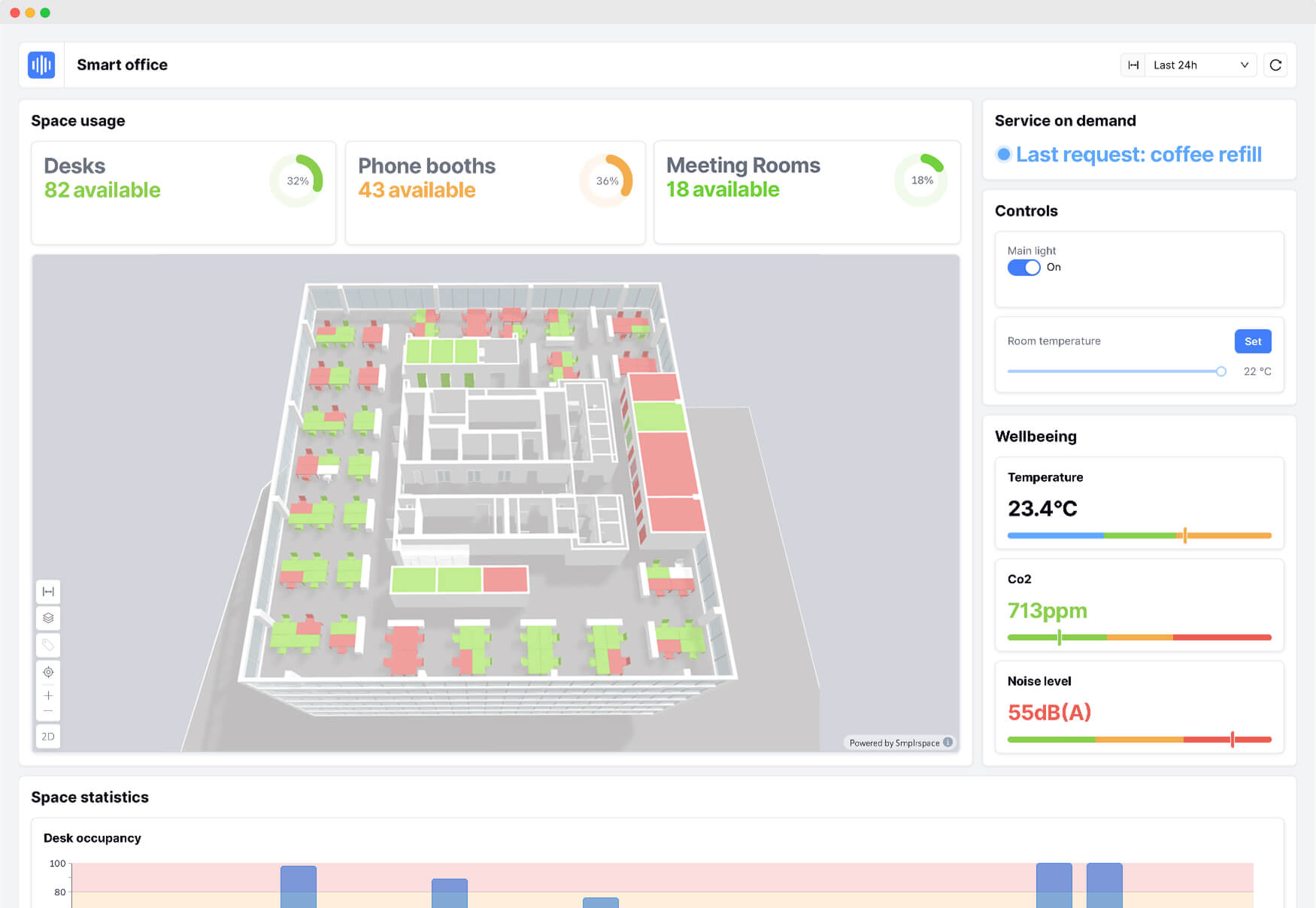
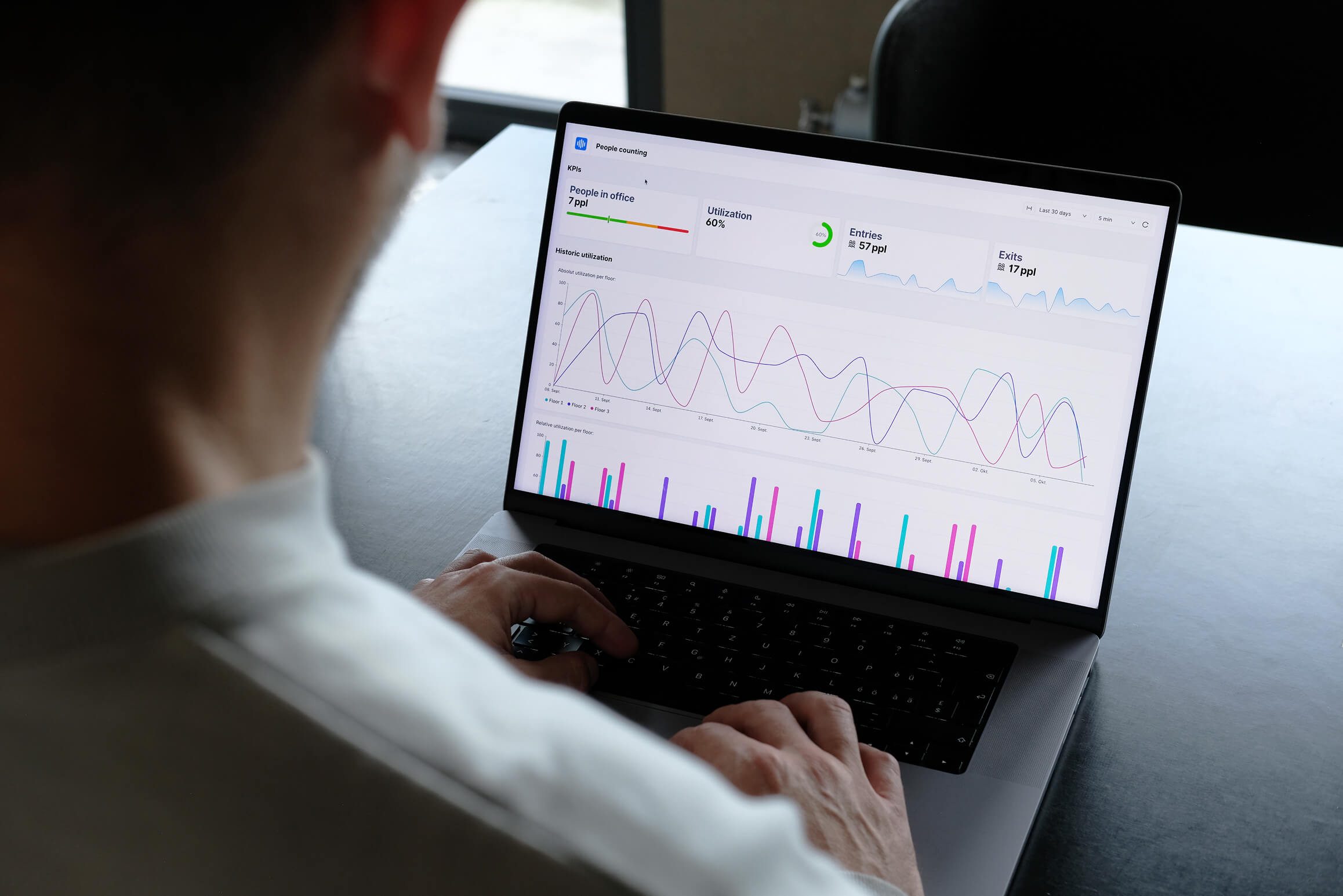
Context-aware dashboards and reports
The Spatial Context Engine anchors live telemetry to a visual model of your physical space. Readings show up on floorplans, in rooms and across zones.
One device or many, it doesn’t matter. Create rules based on data inputs or use tags to organize assets. Trigger rules and actions based on grouping.
Type-based selection
Hierarchy scope
Room aggregation
Aggregation interval
Bulk selection


How many desks are currently occupied?

20% of all desks on Level 3 are currently occupied.
What is the health of my IoT device fleet?
All devices are operational. However, two sensors have battery levels below 20% and will need replacement soon.
What is the status of visitor comfort in the lobby?
Visitor comfort in the lobby is good, but CO2 levels are slightly elevated. Consider ventilating the area or checking the HVAC settings to maintain air quality.
How many desks are currently occupied?
20% of all desks on Level 3 are currently occupied.
What is the health of my IoT device fleet?
All devices are operational. However, two sensors have battery levels below 20% and will need replacement soon.
What is the status of visitor comfort in the lobby?
Visitor comfort in the lobby is good, but CO2 levels are slightly elevated. Consider ventilating the area or checking the HVAC settings to maintain air quality.
Designed for AI
Our engine gives your building metrics a semantic structure. It's what your LLMs need to reason over them. Any AI can now read context, hierarchy and system logic the way a human operator would.
One device or many, it doesn’t matter. Create rules based on data inputs or use tags to organize assets. Trigger rules and actions based on grouping.
Natural language interaction
Live and historical data
Role-aware answers
External data sources included
How many desks are currently occupied?
20% of all desks on Level 3 are currently occupied.
What is the health of my IoT device fleet?
All devices are operational. However, two sensors have battery levels below 20% and will need replacement soon.
What is the status of visitor comfort in the lobby?
Visitor comfort in the lobby is good, but CO2 levels are slightly elevated. Consider ventilating the area or checking the HVAC settings to maintain air quality.